Exploring the mysteries of Gobeklitepe
By Mert Günal ·
Eleven thousand years ago, before pottery, before farming, before the wheel, someone carved a fox into a limestone pillar and stood it upright on a hill in south-eastern Turkey.
Gobeklitepe was found in 1963 and dismissed. A survey team recorded broken slabs, assumed a medieval cemetery, and moved on. It took another thirty years for Klaus Schmidt to look again and realise the slabs were the tops of standing pillars, and that the hill was not a hill.
What is actually there
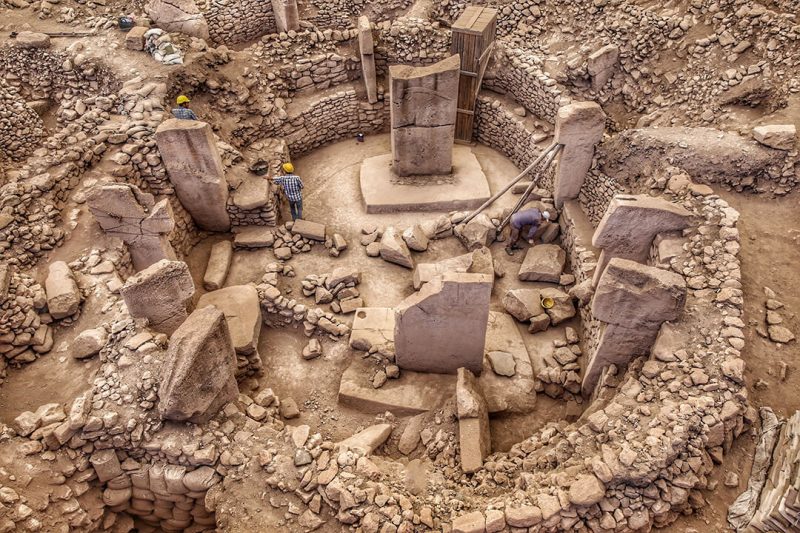
Twenty enclosures, of which six have been excavated. Each is a ring of T-shaped limestone pillars, some five metres tall, carved with foxes, boars, cranes, scorpions and snakes. Two larger pillars stand at the centre of each ring, and they have arms, hands and belts. They are people, or something like people.
The site predates Stonehenge by six thousand years and the pyramids by seven.
What makes it matter is the sequence. The textbook order was: farming first, then settlement, then surplus, then temples. Gobeklitepe was built by hunter-gatherers. The temple came first.
Visiting
The site sits under a modern canopy outside Sanliurfa, about three hours from Gaziantep. An hour is enough to walk the boardwalk, but the museum in Sanliurfa is what makes the visit make sense, and that deserves another two.